What are the four types of calibration?
The four primary types of calibration are dimensional calibration (length, angle, surface), mechanical calibration (force, torque, pressure), electrical calibration (voltage, current, resistance), and thermodynamic calibration (temperature). At Sarkinen Calibrating, we specialize in dimensional and mechanical calibration for CNC machines and precision equipment, including linear positioning, rotary axis accuracy, surface plate flatness, and machine geometry verification.
What is the difference between accuracy and precision calibration?
Accuracy refers to how close a measurement is to the true value, while precision refers to how repeatable measurements are. Accuracy calibration ensures your equipment reads correctly compared to known standards (like NIST), while precision calibration verifies that repeated measurements produce consistent results. Both are critical for manufacturing quality—our services evaluate both accuracy and precision to ensure your machines deliver reliable, correct results every time.
How often should CNC machines be calibrated?
CNC machine calibration frequency depends on usage intensity, part tolerance requirements, and environmental factors. High-precision operations typically require annual calibration, while heavy-use machines may need semi-annual or quarterly verification. We recommend calibrating new machines immediately to verify warranty specifications, after any collision or unusual event, when part quality issues arise, and as part of preventive maintenance schedules to catch problems before they affect production.
What is NIST traceability and why does it matter?
NIST traceability means calibration measurements can be documented back to the National Institute of Standards and Technology through an unbroken chain of comparisons. This matters because it provides legal proof that your equipment meets accuracy requirements, satisfies quality system requirements like ISO 9001, and gives customers confidence in your measurement capabilities. All Sarkinen Calibrating measurements are fully traceable to NIST and International Standards.
How long does machine calibration take?
Calibration duration varies by service type and machine size. Ballbar testing typically takes 2-4 hours, linear calibration for a 3-axis machine ranges from 4-8 hours, rotary axis verification takes 3-5 hours, and surface plate certification usually requires 1-3 hours. We work efficiently to minimize downtime and can often schedule work during off-shifts or weekends to avoid disrupting production schedules.
Can calibration be performed on-site at our facility?
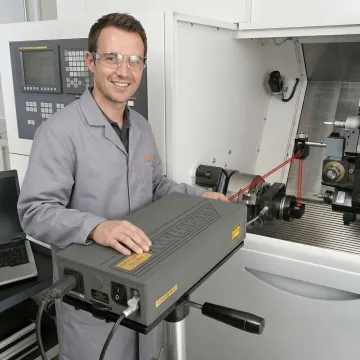
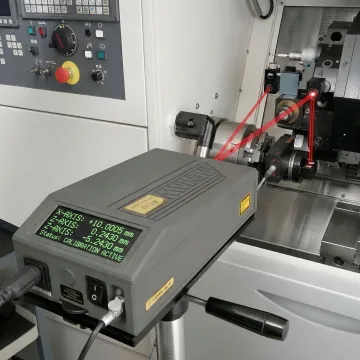
Yes, all of our calibration services are performed on-site at your facility throughout Portland OR and SW Washington. On-site calibration eliminates transportation risks, allows machines to be tested in their actual operating environment, minimizes downtime, and enables immediate follow-up if issues are discovered. Our portable equipment includes Renishaw's Laser Interferometer, QC20-W Ballbar, and Mahr-Federal Electronic Level for comprehensive field testing.
What should I expect in a calibration report?
Our comprehensive calibration reports include detailed measurement data for all tested parameters, before and after comparison if adjustments were made, graphical representations of positioning errors and deviations, pass/fail status against specified tolerances, NIST traceability documentation, specific recommendations for corrective actions if needed, and calibration due dates for future scheduling. Reports provide complete documentation for quality system audits and customer requirements.
How can I tell if my machine needs calibration?
Warning signs include increasing part rejection rates, difficulty holding tolerances that were previously achievable, dimensional inconsistencies between similar parts, axis positioning errors or unexpected tool paths, unusual machine behavior like hesitation or vibration, customer complaints about part accuracy, or simply time elapsed since the last calibration. If you're experiencing any of these issues, contact us for a consultation to determine the best testing approach.