What is machine accuracy inspection and why is it important?
Machine accuracy inspection uses precision measurement tools like laser interferometry and ballbar testing to verify that your CNC machines and precision equipment are performing to specification. It's essential because even minor deviations in positioning, straightness, or squareness directly affect part quality, scrap rates, and production efficiency. Regular inspections identify wear, installation errors, and alignment issues before they cause costly production problems.
How often should I have my CNC machines inspected for accuracy?
Inspection frequency depends on your production volume, part tolerances, and machine usage. Many manufacturers schedule annual inspections as part of preventive maintenance. However, you should also inspect after machine relocation, following major repairs, when you notice quality issues, or to validate new equipment under warranty. High-precision or high-volume operations may benefit from more frequent inspections.
What accuracy level can your inspection services achieve?
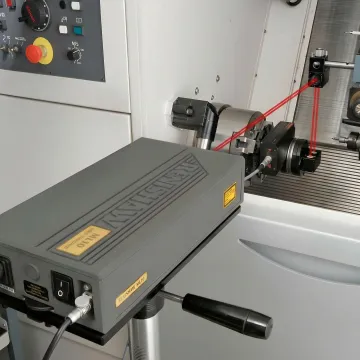
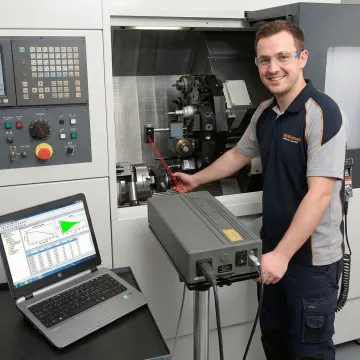
Our Renishaw Laser Interferometer provides measurements accurate to 1.0 parts per million—equivalent to one millionth of an inch per inch. This exceeds the required 10:1 ratio for proper calibration and is fully traceable to NIST and International Standards, giving you documentation that satisfies quality management systems and customer audits.
How long does a typical machine accuracy inspection take?
Inspection duration varies based on machine size, number of axes, and specific tests required. Ballbar testing is one of the quickest methods, often completed in under an hour. Full linear calibration on multi-axis machines may take several hours. We work to minimize production disruption and can often schedule inspections during maintenance windows or off-shift hours.
What areas in Oregon do you serve?
We serve manufacturers throughout Oregon with primary focus on Portland and the surrounding region. As a local Oregon provider, we offer faster response times than out-of-area calibration services. We also have the capability to assist customers outside our primary service area when needed.
Can you inspect machines while they're still under warranty?
Yes, and we strongly recommend it. Inspecting new machines while under warranty is one of our most valuable services. Shipping and installation often introduce alignment errors or hidden damage that may not be immediately apparent. Our inspection clearly identifies whether the machine meets manufacturer specifications, giving you documentation to address issues while warranty coverage is still active.
What happens if your inspection reveals accuracy problems?
We provide detailed diagnostic reports that clearly identify the nature and location of any accuracy issues. This data helps you make informed decisions about whether adjustments, repairs, or component replacement is needed. In many cases, we can identify whether problems stem from mechanical wear, improper installation, foundation issues, or electronic component failure, guiding effective corrective action.
Do you provide training on calibration equipment?
Yes, we offer hands-on training for Renishaw's Laser Interferometer and QC20-W Ballbar systems, as well as CAM software and CNC operation. Training covers proper setup, data collection, result interpretation, and basic troubleshooting. This is ideal for maintenance teams and quality engineers who want to perform in-house diagnostics and better understand machine accuracy data.