What is precision calibration for industrial instrumentation?
Precision calibration for industrial instrumentation is the process of verifying and adjusting measurement accuracy of manufacturing equipment such as CNC machines, coordinate measuring machines, surface plates, and inspection tools. It ensures equipment performs to manufacturer specifications and produces parts within required tolerances by comparing measurements against NIST-traceable standards.
How often should CNC machines be calibrated?
CNC machine calibration frequency depends on usage, precision requirements, and manufacturer recommendations. Most manufacturers recommend annual calibration at minimum. High-precision or high-volume operations may require quarterly or semi-annual calibration. Calibration should also be performed after machine relocation, collision events, major repairs, or when part quality issues arise.
What is NIST-traceable calibration and why does it matter?
NIST-traceable calibration means measurements are linked to standards maintained by the National Institute of Standards and Technology through an unbroken chain of comparisons. This traceability provides documented proof that your measurements are accurate and reliable, which is essential for quality assurance, customer requirements, ISO compliance, and warranty claims.
How accurate is laser interferometer calibration?
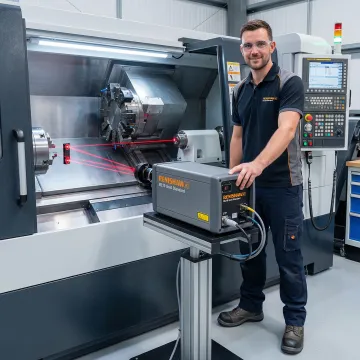
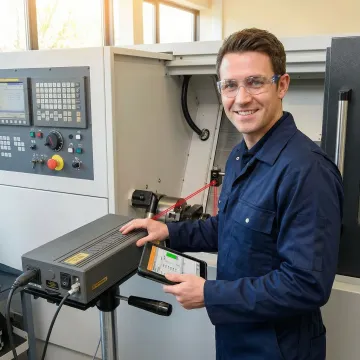
Laser interferometer calibration provides accuracy to 1.0 parts per million, which equals one millionth of an inch per inch of travel. This exceeds the 10:1 ratio required for proper calibration and provides highly reliable measurements for evaluating positioning accuracy, repeatability, straightness, and squareness of linear axes.
What is ballbar testing and what does it reveal?
Ballbar testing uses a precision telescoping bar with sensors to trace a programmed circular path, measuring deviations from true circularity. It quickly reveals machine health issues including backlash, servo mismatch, axis reversal errors, squareness problems, and stick-slip conditions. It's one of the fastest ways to validate machine condition and troubleshoot accuracy problems.
How long does calibration take and will it disrupt production?
Calibration time varies by service type and machine complexity. Ballbar testing typically takes 1-2 hours. Full laser interferometer calibration of a 3-axis machine typically takes 4-8 hours. We schedule services to minimize production disruption and can often work during maintenance windows or off-shifts. Our local presence allows flexible scheduling.
Do you provide calibration certificates and documentation?
Yes, every calibration service includes comprehensive documentation with measurement data, traceability information, equipment details, and identified deviations. Certificates clearly show compliance status and recommended actions. This documentation supports quality system requirements, customer audits, and warranty claims when applicable.
What areas do you serve for calibration services?
Sarkinen Calibrating primarily serves Portland OR and SW Washington with faster response times than out-of-area providers. We also provide calibration services to customers outside this region including Oregon, Northern California, and Idaho when needed, though local customers benefit from quicker scheduling and reduced travel costs.