What is meant by machine calibration?
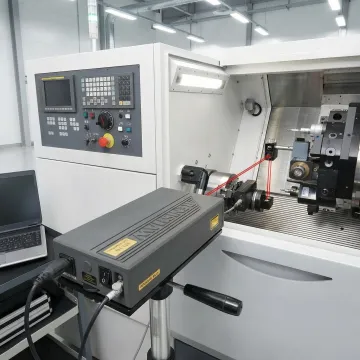
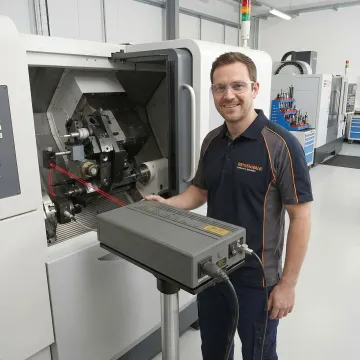
Machine calibration is the process of verifying and adjusting equipment to ensure it performs to specified accuracy standards. For industrial machines, this involves measuring positioning accuracy, repeatability, straightness, squareness, and other geometric characteristics using precision instruments. Calibration identifies deviations from ideal performance and provides data to correct errors, ensuring machines produce parts within required tolerances consistently.
What is the cost of calibration?
Calibration costs vary based on machine type, size, number of axes, testing complexity, and location. Factors include the specific services needed—such as laser interferometry, ballbar testing, or rotary axis verification—and the time required for setup and measurement. Contact us for a detailed quote tailored to your equipment and requirements. We provide transparent pricing and focus on delivering value that prevents costly production errors and downtime.
Who can perform calibration?
Industrial machine calibration should be performed by trained professionals with specialized equipment and expertise. Proper calibration requires precision measurement instruments like laser interferometers, ballbar systems, and electronic levels, along with knowledge of machine geometry, error compensation, and NIST-traceable standards. Sarkinen Calibrating provides expert calibration services and also offers training programs for teams who want to perform certain in-house diagnostics.
How often should industrial machines be calibrated?
Calibration frequency depends on machine usage, criticality of parts produced, manufacturer recommendations, and industry requirements. Many facilities calibrate annually, while high-precision or high-volume operations may require more frequent verification. New machines should be calibrated after installation to verify warranty specifications, and calibration is recommended after relocation, major repairs, or when part quality issues arise.
What equipment do you use for calibration?
We use industry-leading precision instruments including Renishaw's Laser Interferometer for linear accuracy measurement, Renishaw's QC20-W Ballbar for circular performance testing, Renishaw's Rotary Calibration System for angular positioning, and Mahr-Federal's Electronic Level for pitch and roll detection. All measurements are traceable to NIST and International Standards.
Can calibration be done without removing the machine from production?
Yes, most calibration services are performed on-site with minimal disruption. Setup times vary by test type, but our wireless systems and efficient processes are designed to minimize downtime. We work with your production schedule to complete measurements during planned maintenance windows, shift changes, or slower periods whenever possible.
We primarily serve manufacturing facilities in Portland OR and SW Washington, providing faster response times than out-of-area providers. We also have capabilities to assist customers outside our primary service area when needed. Our local presence ensures quick scheduling, rapid response for urgent needs, and ongoing support for your calibration requirements.
Do you provide calibration reports and documentation?
Yes, every calibration service includes comprehensive documentation with detailed measurement results, pass/fail status against specifications, and NIST-traceable certification. Reports clearly identify any issues found and provide data to support maintenance decisions, warranty claims, quality audits, and customer requirements. Documentation helps you maintain compliance and demonstrate measurement confidence.