What does it mean if my calibration curve is linear?
A linear calibration curve means there is a consistent, proportional relationship between measured values and true values across the measurement range. In linear axis calibration, linearity indicates that positioning errors are predictable and systematic rather than random, making them easier to compensate through machine parameters or understanding their impact on part accuracy.
What is axis calibration?
Axis calibration is the process of measuring and verifying the accuracy of a machine's linear or rotary axis movement. For linear axes, this includes testing positioning accuracy (how close the axis gets to commanded positions), repeatability (consistency of returning to the same position), straightness (geometric deviation from a straight line), and squareness (perpendicularity between axes). Calibration identifies errors caused by mechanical wear, thermal effects, installation problems, or control system issues.
How often should an alignment machine be calibrated?
Calibration frequency depends on machine usage, criticality of parts produced, and industry requirements. Most manufacturers calibrate precision CNC machines annually, but high-volume production or tight-tolerance work may require quarterly or semi-annual calibration. New machines should be calibrated immediately after installation to verify warranty compliance. Calibration is also recommended after machine relocation, major repairs, or when part quality issues suggest accuracy problems.
What accuracy level does Sarkinen Calibrating achieve?
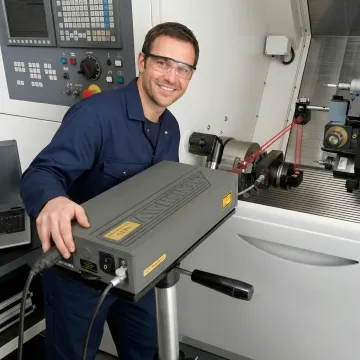
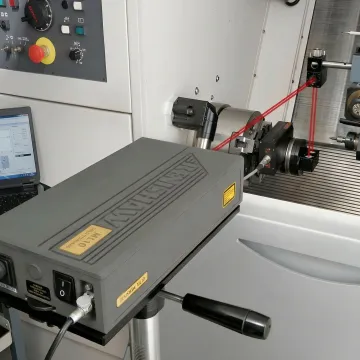
We achieve accuracy to 1.0 part per million (one millionth of an inch per inch) using Renishaw's Laser Interferometer. This level of precision exceeds the industry-standard 10:1 ratio required for proper calibration and ensures measurements are fully traceable to NIST and International Standards, providing confidence in results and regulatory compliance.
Why should I calibrate a new machine under warranty?
Shipping and installation often introduce alignment errors, hidden damage, or setup mistakes that affect machine accuracy. Calibrating while under warranty allows you to identify and document these issues before production begins, ensuring the manufacturer corrects problems at no cost. This protects your investment and prevents discovering accuracy issues after the warranty expires.
What is the difference between positioning accuracy and repeatability?
Positioning accuracy measures how close the machine gets to a commanded position (systematic error), while repeatability measures how consistently it returns to the same position over multiple cycles (random error). A machine can have good repeatability but poor positioning accuracy, or vice versa. Both measurements are critical for understanding overall machine performance and diagnosing specific problems.
How long does linear axis calibration take?
Calibration time varies based on machine size, number of axes, and extent of testing required. A typical three-axis CNC machine calibration takes 4-8 hours, including setup, measurement, data analysis, and reporting. As a local Portland OR and SW Washington provider, we schedule efficiently to minimize production disruption and can often complete work during off-shifts or planned maintenance windows.
What problems does linear axis calibration identify?
Calibration reveals positioning errors, poor repeatability, straightness deviations, squareness problems, thermal drift, backlash, servo mismatch, encoder issues, guideway wear, structural misalignment, and control system problems. Early detection allows proactive maintenance before these issues create scrap, rework, or unexpected downtime, protecting both production quality and equipment investment.