How do you test the accuracy of a CNC machine?
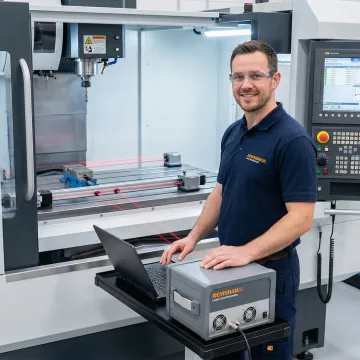
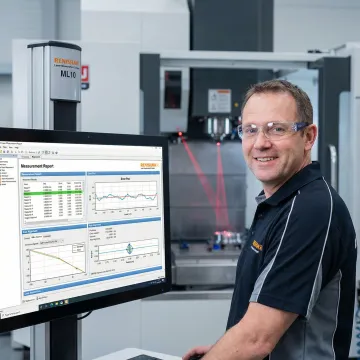
We test CNC machine accuracy using multiple precision measurement systems. Our Renishaw Laser Interferometer measures linear positioning accuracy, repeatability, straightness, and squareness to 1.0 part per million across the full axis travel. The QC20-W Ballbar evaluates circularity and identifies wear issues like backlash and servo mismatch. We also use electronic leveling to detect pitch and roll errors, and rotary calibration systems to verify angular positioning. All measurements are NIST-traceable and exceed the required 10:1 calibration ratio.
What is the accuracy of CNC machines?
CNC machine accuracy varies by manufacturer, model, age, and maintenance history. High-precision machines typically specify accuracies from ±0.0001" to ±0.0005" per axis, but actual performance can degrade due to wear, installation issues, or environmental factors. Our verification services measure your machine's true accuracy against specifications, identifying deviations before they impact production quality. We provide documented proof of performance with NIST-traceable measurements.
What is the tolerance for CNC precision?
CNC precision tolerances depend on the application and machine capability. Typical machining tolerances range from ±0.005" for general work to ±0.0001" or tighter for precision applications. Machine accuracy must be significantly better than part tolerances—ideally 10 times better. Our calibration services verify your machine can consistently hold the tolerances your customers require, providing documented evidence of capability.
How often should I verify CNC machine accuracy?
We recommend annual accuracy verification for most production machines, with more frequent testing for high-precision work or high-utilization equipment. Always verify accuracy after machine relocation, collision events, or when part quality issues appear. For new machines, verify accuracy while still under warranty to identify shipping or installation damage before it impacts production.
What causes CNC machines to lose accuracy?
Common causes include mechanical wear on ballscrews and guideways, backlash in drive components, thermal expansion during operation, improper leveling or installation, collision damage, and servo tuning drift. Foundation settling, environmental vibration, and age-related degradation also affect accuracy. Our comprehensive testing identifies the specific issues affecting your machine's performance.
Can you calibrate machines from any manufacturer?
Yes, our Renishaw and Mahr-Federal measurement systems work with CNC machines from all major manufacturers including Haas, Mazak, DMG Mori, Okuma, Makino, and others. We verify accuracy regardless of control system type (Fanuc, Siemens, Heidenhain, etc.) and can test machining centers, lathes, multi-axis mills, and machines with rotary components.
How long does accuracy verification take?
Testing time varies by machine size and complexity. A standard 3-axis machining center typically requires 4-8 hours for complete linear calibration of all axes. Ballbar testing is faster, often completed in 1-2 hours and provides quick health assessment. We work efficiently to minimize production downtime, and wireless technology like the QC20-W Ballbar reduces setup time significantly.
What service areas do you cover?
We primarily serve Portland OR and SW Washington with faster response times than out-of-area providers. Our local presence means less scheduling delay and more responsive service when accuracy issues arise. We also provide service to customers outside our primary area when needed, including Northern California, Oregon, Washington, and Idaho.